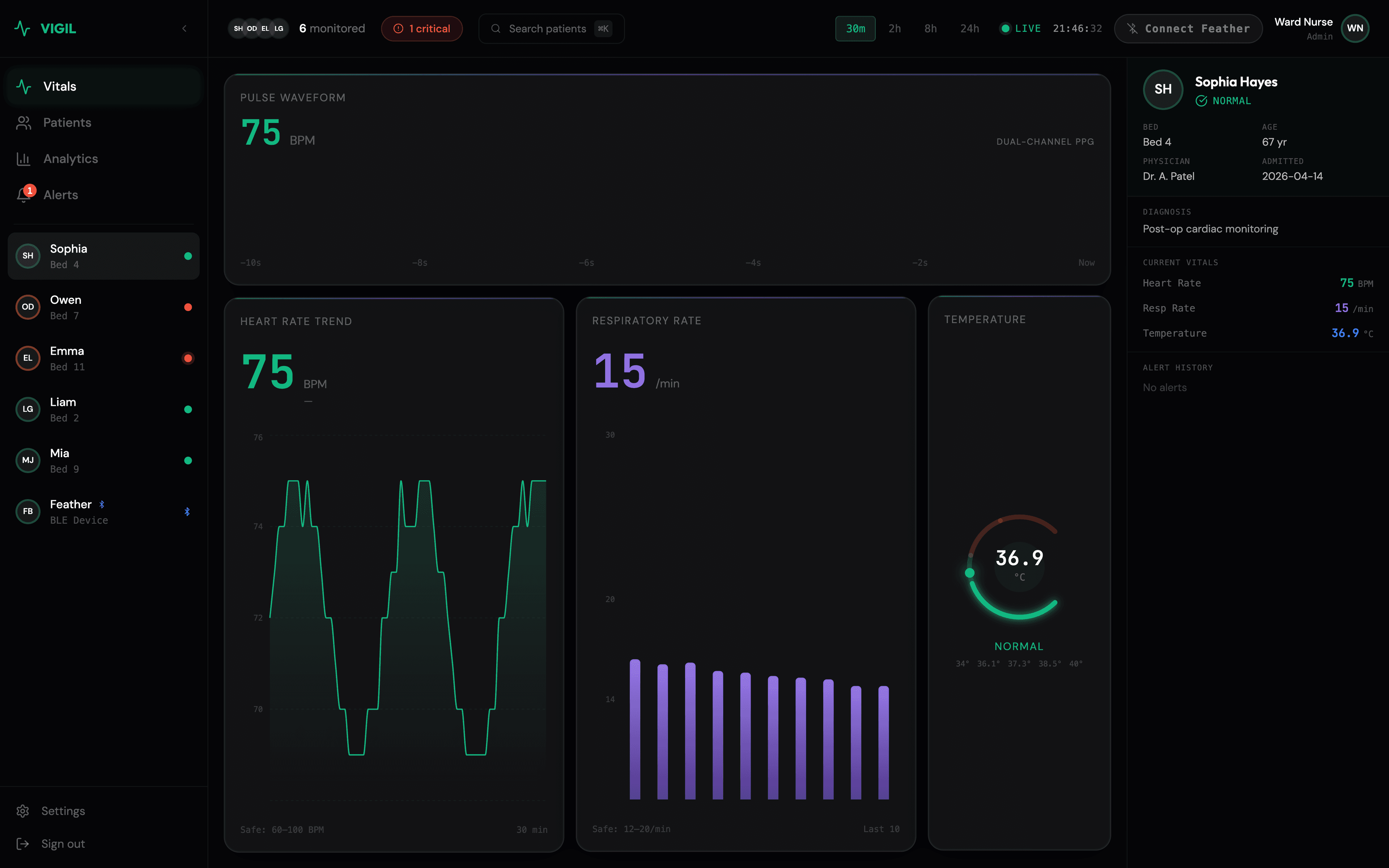
VIGIL

Loading

ContinuousContinuousICU-gradeICU-grademonitoringmonitoringatatultra-lowultra-lowcost.cost.

Monitoring gap

The issue isn't signal quality. It's the hours between checks.

General ward patients are usually checked every 4-8 hours. VIGIL refreshes every 5 seconds, closing the blind spots that intermittent rounds leave behind.

Typical ward cadence

Every 4-8 hours

Manual spot checks create long windows where patient status can drift without a fresh read.

Spot checks
Coverage gaps3-6 checks/day

VIGIL cadence

Every 5 seconds

Continuous monitoring keeps new data flowing fast enough to surface deterioration before the next round.

Continuous feed
Coverage17,280 refreshes/day

Ward-scale deployment

ICU-grade coverage without ICU-only hardware economics.

Sensors

4

Four signals in a single lightweight wearable.

Weight

<45g

Comfortable enough for long sessions and fast turnover.

Per unit

$46

Priced for ward-scale rollout, not just premium beds.

Refresh

5s

Continuous readouts instead of long gaps between checks.

Built to give general floors continuous coverage without the cost, weight, or workflow burden of traditional bedside setups.

Roadmap

From pilot to platform

10+

beds continuously monitored

Phase 01Q4 2025 – Q3 2026Current

Clinical Validation

Pilot deployments at Emory University and Augusta University hospitals.

10 beds · 1 ward · 2 hospitals$460
01020304

A single bedside monitor costs $5,000–$15,000. VIGIL equips 200 beds for under $9,200.